
When Baby Milk Becomes Dangerous: Who Is Informing Parents in Mallorca About the Nestlé Recall?
When Baby Milk Becomes Dangerous: Who Is Informing Parents in Mallorca About the Nestlé Recall?
Nestlé is recalling batches of infant formula because of the toxin cereulide. A critical assessment for parents in Mallorca: what do we know, what's missing, and what should be done?
When Baby Milk Becomes Dangerous: Who Is Informing Parents in Mallorca About the Nestlé Recall?
Central question: Is the information sufficient — and are parents on the island adequately protected?
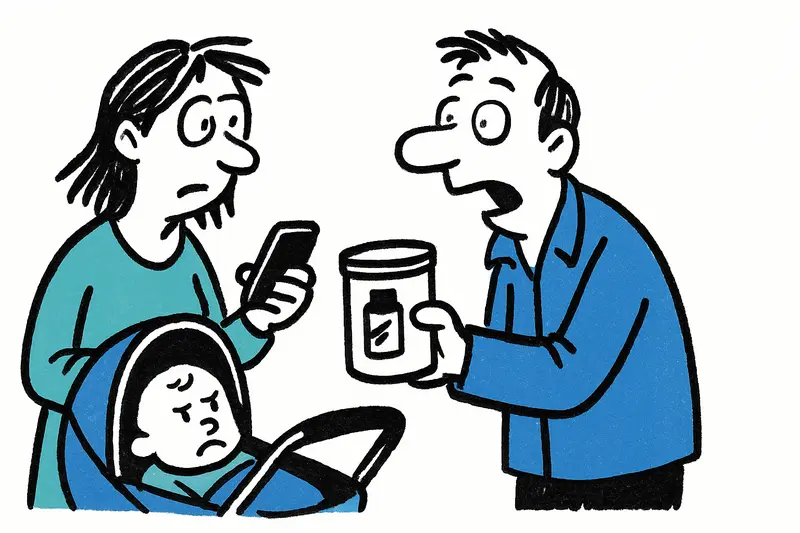
In the early morning in front of the Mercat de l'Olivar it smells of fresh bread, the tram rattles by and a young mother is slowly pushing her stroller over the cobblestones of Passeig del Born. She stops, looks at her phone and frowns: does she have the affected tin in the cupboard? Such scenes are becoming more common in Palma and across the island. Nestlé has precautionarily recalled several batches of infant starter formula because the bacterium Bacillus cereus can produce a heat-stable toxin — cereulide — which can cause severe vomiting, diarrhea and lethargy in infants. This is stated clearly on the manufacturer's website; various NAN, NIDINA and Alfamino products are affected. Local coverage has also reported similar product withdrawals, for example the Knorr chicken soup recall in Mallorca.
The question occupying us: are the measures and the communication sufficient so that parents in Mallorca can act quickly, safely and without panic? I think: no — for several reasons, which I outline here factually.
Critical analysis
First: a recall is necessary and correct, but it does not relieve the manufacturer and the authorities of the duty to provide comprehensive information. In practice this means: information must reach people, be understandable and state specifically which batches are affected and how parents can read the numbers on the packaging. Nestlé offers a batch number check on its Spanish site — good. But not every family checks the manufacturer's website daily. In supermarkets, pharmacies and drugstores there is so far a lack of widespread, clearly readable information on the shelves.
Second: questions about the cause remain open. Cereulide is produced by B. cereus; the microorganism occurs in the environment. It remains unclear how it entered certain batches, which production steps were affected and which quality controls before shipping missed the contamination. Trust in the brand suffers especially when parents cannot understand whether this was a one-off problem or a systemic issue.
Third: social aspects are hardly mentioned in the public discourse. Some families are economically dependent on industrially produced infant formula — due to work constraints, medical indications or lack of milk production. A recall hits these households particularly hard if there are no quick, unbureaucratic alternatives, substitute products or reimbursements.
What is missing in the public debate
There is a lack of a clear, local information network. Mallorca is not an anonymous big city: clinics, health centers, pharmacists, midwives and pediatricians know their neighborhoods and their patients. These actors should immediately receive central information sheets and checklists to address parents directly. There is also a lack of a transparent timeline: when were the affected batches produced? who distributed them? which points of sale on the island carried the products? Past local recalls, such as a recent shower gel recall over Burkholderia cepacia in Mallorca, show how important it is to list points of sale and distribution details.
Concrete everyday scene
Imagine a Saturday morning in Portixol: a father wants to buy diapers and instinctively picks up a tin of milk powder as well. Later at home he reads the news and discovers that the batch number matches. Who does he call first? The shop? The pediatrician? The authorities? In such situations simple, clear instructions count — not long press releases.
Concrete solutions
1. Visible notices in shops and pharmacies: every retail point in Mallorca that stocks the affected brands should immediately be supplied with printed notices in Spanish, Catalan and German. Short bullet points: which products to check, where the batch number is located, what to do if symptoms appear.
2. Local hotline and clear contact points: the island health authority or health centers could set up a central telephone number and a simple website with a search function for batch numbers and return locations. For emergencies the usual number is 112.
3. Support for affected families: pharmacies and supermarkets must publicize return and refund rules; social services should provide short-term help for families without alternatives — for example with medically recommended substitute formulas.
4. Transparency in investigating the causes: production and laboratory checks should be published with a timeline. Parents have the right to know whether and how the error is being corrected.
5. Better storage and heating information: because cereulide is heat-stable, simply boiling does not help. Manufacturers and health authorities should provide easy-to-understand guidance on storage, preparation and disposal.
Punchy conclusion
The recall is a warning signal. It shows that systems work — a manufacturer is removing a potentially dangerous product from the market. But it also reveals weaknesses: when parents between Mercat de l'Olivar and Cala Major are puzzledly checking their tins, there is a lack of comprehensive, locally effective communication. Responsibility does not only mean "we have recalled", but also "we take responsibility, explain, replace and prevent recurrence". On Mallorca this should no longer remain an abstract demand: pharmacies, health centers and island authorities must now weave a pragmatic information network together so that no family is unnecessarily scared by unclear information or, worse, risks a delayed medical response.
And one final practical tip for parents: keep the packaging, the formula and the feeding log. Note the batch number and purchase date. That makes inquiries faster and helps pediatricians if symptoms occur. The island is small — help is reachable. It just needs to be faster, louder and clearer this time than the WhatsApp chains currently circulating.
Read, researched, and newly interpreted for you: Source
Similar News

Almudaina temporarily closed: Modernization yes, but at what price?
The Palacio Real de la Almudaina in Palma is closed from 12 January to 1 June 2026. €2.33 million from the recovery plan...

Where Should Our Waste Go? A Critical Look at Mallorca's Role as a Waste Hub
Mallorca will soon take in waste from Ibiza and Formentera — and possibly Menorca. A one-year pilot with around 30,000 t...
New family hotel in Font de Sa Cala: 364 rooms and extensive gardens in Capdepera
The Fergus Group has opened a club resort with 364 rooms in Font de Sa Cala. The site, with large garden areas, is aimed...
Dangerous Visibility: The V16 Warning Light and the Security Risk in Mallorca
Since January the V16 has been mandatory as a breakdown warning. Side effects are now appearing in Mallorca: live tracki...

Balearic Weather: Mallorcan weather channel now speaks English
A young amateur meteorologist from Palma will now offer warnings and live images in English as well. Good news for touri...
More to explore
Discover more interesting content

Experience Mallorca's Best Beaches and Coves with SUP and Snorkeling

Spanish Cooking Workshop in Mallorca
