
It cracks, creaks, rattles: Reality check on the storm warning in Mallorca
It cracks, creaks, rattles: Reality check on the storm warning in Mallorca
AEMET issues a yellow storm warning with gusts up to 100 km/h in the Tramuntana and waves up to 3 meters. A critical analysis: what is missing in the island's preparedness?
It cracks, creaks, rattles: Reality check on the storm warning in Mallorca
Guiding question: Are the warnings — and our response to them — sufficient to minimize damage and danger on the island?
AEMET has issued a yellow alert for strong winds over Mallorca for this Saturday, as described in Yellow Warning: When the west wind sweeps across Mallorca — how prepared is the island?. The Serra de Tramuntana is particularly affected: gusts there can locally reach up to 100 km/h. During the night some measuring stations already recorded around 70 km/h. In addition there is a yellow warning for rough seas with waves up to three meters on the south and north coasts as well as along the Tramuntana coast. On Menorca authorities reported winds of around force 7 at the coast and inland gusts of about 70 km/h. Daytime temperatures hover around 15 degrees, at night they drop in places just below 10 degrees; in the coming days it should become somewhat calmer and milder (up to around 18 degrees).
Does this sound like just a weather statistic? It is not. The question is how these figures are translated into concrete behavior, organization and protective measures. For many people on Mallorca these are not abstract numbers: an overturned construction fence on the Ma-10, a palm tree torn down on the Paseo Marítimo, a churning sea smashing small boats against the rocks — we have seen such scenes more often in recent years.
Critical analysis: the yellow warning means "caution", but it does not indicate how far-reaching the consequences can be. It often remains unclear whether schools, ferry connections or ports should be closed, who is responsible for clearing fallen trees and how quickly municipal emergency services can respond, as discussed in Storm warning in Mallorca: Is the island prepared for wind and rain?. Services do react to inquiries, but public debate frequently lacks the link between forecast and concrete action recommendations for different groups: residents on slopes, farmers with greenhouses, port operators, hikers in the Tramuntana and tourists walking along the coast.
What is underrepresented in the debate is everyday logistics. On Mallorca shutters, awnings and advertising banners are often left open because life takes place outdoors here. Guest corridors in Portixol or cafés on the Passeig, where tables are normally placed on the street, are particularly vulnerable. The many short-term vacation rentals and their operators are rarely informed directly: rental agreements contain few instructions for storm times, and guests often rely on personal experience rather than official warnings.
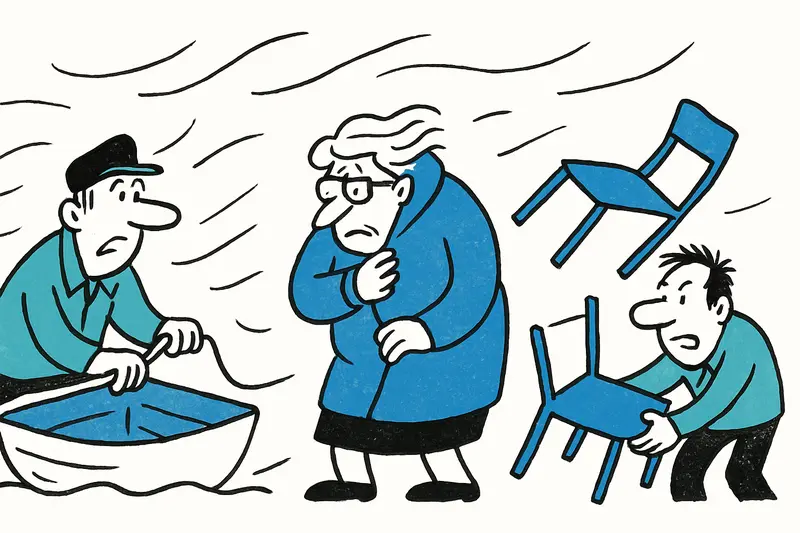
A small everyday scene: it is Saturday noon, the wind screams over the roofs in La Lonja. On the Plaça Major two restaurant owners are hooking the last chairs together, an elderly woman pulls her jacket tighter and looks toward the sea — not out of fear, more out of habit. A fisherman in Port de Sóller secures his boat with an extra line. Such scenes show that many people act intuitively. Still, intuition is not always enough.
Concrete solutions that can work quickly and at low cost: 1) More precise, target-group-specific warnings: link AEMET alerts to local municipal messages via SMS or WhatsApp channels with clear action instructions (e.g. "close ports to leisure boats", "secure shutters"). 2) Checklists for vacation rental hosts: simple instructions for securing outdoor furniture, parking vehicles and behavior during beach walks. 3) Municipal prioritization: routinely inspect trees along heavily used roads and bus routes to detect weak points early; depending on the warning level temporarily close dangerous sections — the Ma-10 in exposed stretches deserves special attention. 4) Ports and navigation: clear protocols for when pleasure craft may sail or must be hauled ashore. 5) Public signage on promenades and beach accesses: simple boards reading "Keep away from cliffs and waves during storms"; this especially helps tourists.
Long-term topics for the discussion include better vegetation management along road edges, robust anchoring for outdoor furniture in urban areas and more transparent exercise scenarios for municipal emergency units, as highlighted in Severe weather on Mallorca: When it really becomes critical — and what's still missing. Small measures such as free nets to secure cushions at beach bars or subsidized safety kits for small businesses would also reduce the extent of damage.
What is sometimes missing in the public debate is the word "responsibility" in the plural: not only authorities, but also landlords, restaurateurs, boat owners and tourists must know their role. And warnings must be practical, not just technically correct. A "yellow" without concrete tips reaches too few people.
Conclusion: The current forecasts should be taken seriously. AEMET's figures are a reason for caution, but they must go hand in hand with clear local recommendations and pragmatic measures; similar gust warnings have been examined in Storm 'Benjamín': Is Mallorca Prepared for the Gusts?. Otherwise the result will be more noise than benefit — for roofs, traffic and nerves. So: shutters down, tables in, boats secured and when in doubt choose a walk on higher, sheltered ground. Mallorca is used to storms, but not invulnerable.
Read, researched, and newly interpreted for you: Source
Similar News
Winter Sun: Five Quiet Coves on Mallorca That Are Especially Enchanting Now
Winter sand, a calm sea and faint scents of pine: we present five coves — from easy-to-reach to adventurous — for relaxe...

Adrián Quetglas: Good Cuisine for Many — a Visit on the Passeig
A walk to Passeig de Mallorca 20 leads into Adrián Quetglas's small universe: award‑worthy lunchtime menus, creative pla...

Portocolom gears up: Fishermen's huts and quay receive new protection
Craftsmen, boats and the salty smell of the harbor: this winter Portocolom is seeing extensive work on the promenade and...

Felanitx: Between the Plaça, the Park and Renewal – the village that likes to carry on
Felanitx presents itself as a place of familiarity and small innovations: market vendors, a meeting spot at Ca n’Usola, ...
Fire, Drums, Village Square: Sant Antoni Awakens on Mallorca
At the end of January many villages on Mallorca grow loud, warm and a little wild again: the traditional fire runs for S...
More to explore
Discover more interesting content

Experience Mallorca's Best Beaches and Coves with SUP and Snorkeling

Spanish Cooking Workshop in Mallorca
