
"A disaster" on board: What a drunk passenger means for the Balearic Islands
"A disaster" on board: What a drunk passenger means for the Balearic Islands
A heavily intoxicated passenger caused an aborted takeoff from Madrid to Ibiza and about two hours' delay. A reality check: who protects passengers and staff — and what's missing in everyday operations on the ground?
A disaster on board: What a drunk passenger means for the Balearic Islands
Takeoff aborted near Madrid, two-hour delay for Ibiza — and a lot of trouble for passengers
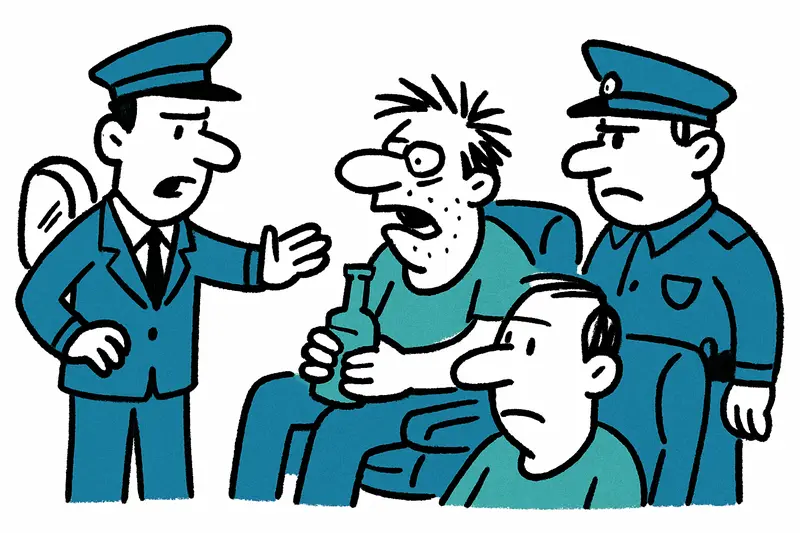
A scheduled flight from Madrid to Ibiza had to be halted in the evening because an apparently heavily intoxicated man started rampaging on board shortly before departure. The crew failed to calm the situation before taxiing; the captain aborted takeoff in Basel, the aircraft left the runway, the Guardia Civil boarded and removed the person from the plane. The landing in Ibiza was delayed by about two hours.
Key question: How well are airports, airlines and authorities prepared for such incidents, and how can future escalations be prevented?
Critical analysis: Such events are not merely an individual annoyance; they strain the entire chain from ground staff and crew to waiting passengers. When someone behaves aggressively already before boarding — according to observations loud phone calls, verbal provocation, repeated warnings by staff — it shows that existing checkpoints are failing. Cabin crew management has rules, but in practice there is often a lack of quick, legally secure intervention options: Can an airline immediately exclude a passenger from travel? Must airport security services be called in right away? Who bears the costs for the delay? Recent cases, such as a passenger denied boarding at Memmingen Airport, highlight these legal and operational grey areas.
What is missing from public debate: There is a lot of talk about storms and technical problems, but far too little about preventive measures against alcohol-related incidents. We hardly discuss how alcohol consumption is controlled before departure — neither at bars and pubs at the point of departure nor at the gate. Equally underexposed is how international passenger rights affect cases involving criminal behavior: fines, criminal charges, rebooking and overbookings in the Balearic Islands, responsibility for incurred costs. And there is a lack of clear, visible procedures so that crew and ground staff know when the Guardia Civil is called and what documentation is required.
Everyday scene from Mallorca: In the morning at a café on Passeig Mallorca, Elena sits with her suitcase beside a cup of café con leche and listens to airport staff discussing the incident. The radio in the venue is broadcasting reports about delayed flights; outside a bus on line 5 honks, and the sound of the sea forms a constant background. Conversations like these are increasingly common: travelers are annoyed, commuters plan larger time buffers, and families with children ask anxiously about safety measures.
Concrete solutions: First, expand preventive alcohol policies at airports. That does not mean banning every drink, but rather visible notices, clearer checks and trained security teams who are allowed to intervene before boarding. Second, establish binding escalation protocols between airlines, airport operators and the Guardia Civil, including clear reporting thresholds and logging so decisions hold up in court. Third, provide training for cabin and ground staff in de-escalation and legal basics — short, practical trainings instead of long theory. Fourth, transparent communication for passengers. A short information sheet at check-in or an announcement at the gate explaining how disruptions are handled builds trust and reduces panic. Fifth, sanctions and traceability. Repeat offenders should be entered into a central incident database linked to clear legal steps and potential travel bans — balanced with data protection.
Practical first steps: Island airports could launch pilot projects in coordination with airlines: additional security shifts during peak times, mobile rest areas for agitated passengers and a standardized protocol for immediate involvement of the Guardia Civil. Small measures, like separate queues for families and seniors, reduce stress — and thus the potential for conflict.
Punchy conclusion: A rampaging passenger is never only the problem of a single flight. He tests limits in the system — psychological, legal and organizational. If we avoid symbolic token solutions, many cases can be defused through clearer rules, visible prevention and better training. In the end, not only holidaymakers and business travelers to Ibiza and Mallorca benefit, but also the crew who must return on board and can hope the next takeoff will be calmer.
Read, researched, and newly interpreted for you: Source
Similar News
100 Kilometers through the Llevant: New GR 226 Long-Distance Trail Opened
The new East Mallorca long-distance trail GR 226 links five Llevant municipalities over 100.4 km. Low difficulty, nearly...

After mixed weeks: Calmer weather returns to Mallorca
After a period of rain and strong winds, Mallorca's weather is calming down. AEMET reports milder days with highs near 2...
Four Arrests After Series of Shoplifting Incidents in Palma – a Reality Check
The Policía Nacional arrested four men suspected of stealing goods from shops across Palma in nearly 80 incidents since ...

New safety system for trains in Mallorca – lots of technology, open questions
The Balearic government presents a new safety system for rail transport. Gaps remain between the announcement and everyd...
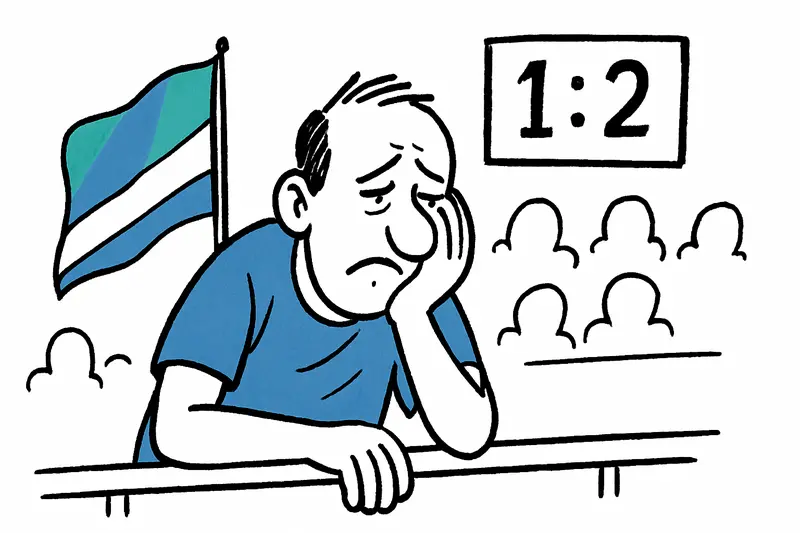
Real Mallorca loses to Betis – a sobering evening at Son Moix
1:2 against Real Betis, goals by Abde and Bakambu for the visitors, Vedat Muriqi with a header for Mallorca. The home wi...
More to explore
Discover more interesting content

Experience Mallorca's Best Beaches and Coves with SUP and Snorkeling

Spanish Cooking Workshop in Mallorca
