
Electronic 'Co‑Pilot' for Mallorca's Trains – More Safety, but Which Questions Remain?
Electronic 'Co‑Pilot' for Mallorca's Trains – More Safety, but Which Questions Remain?
The Balearic government announces ERTMS for the island: pilot in 2026, metro 2027, rail network 2028–2029. A look at opportunities, gaps and everyday life in Mallorca.
Electronic 'Co‑Pilot' for Mallorca's Trains – More Safety, but Which Questions Remain?
What does the new system promise – and what remains unclear?
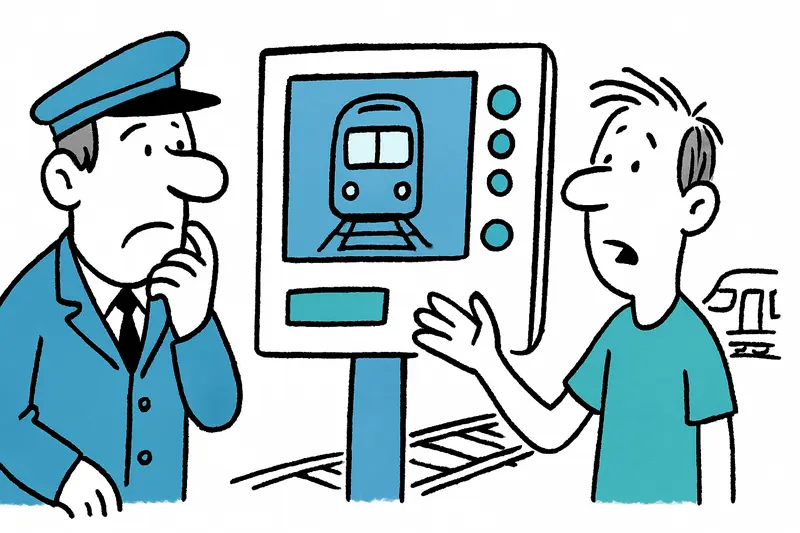
In the morning in front of the Estació Intermodal in Palma commuters sit with steaming coffee in plastic cups, and the smell of lubricating oil still lingers on the tracks. The Balearic government has announced that the European train protection system ERTMS will be used on Mallorca in the future – an electronic assistant that monitors speed and signals and can automatically brake or stop in an emergency. A pilot is supposed to start this year, the metro network from 2027, and the remaining rail network gradually between 2028 and 2029. Cost: according to the authorities, more than 50 million euros, a level of public spending that has prompted broader funding questions similar to those raised in Free Public Transport in Mallorca 2026: Relief — Will the Money Be Enough?.
Key question: Will ERTMS noticeably increase safety – and are the preparations on Mallorca really sufficient?
In short: Technically, ERTMS is a clear advance over purely signal-based systems. The installation can ensure that a train does not enter a signal or a tight section of track at excessive speed. For passengers this potentially means fewer serious accidents. But technology alone does not make a network safe.
First analysis points: integration, personnel, funding. On an island like Mallorca the rail network is relatively compact, but connected with bus services, port and airport links. ERTMS must communicate seamlessly with existing signal boxes, points and the traffic control centre. Such integrations consume time and money – and they are prone to faults if interfaces are poorly defined.
The second issue is personnel. A system that brakes automatically changes workflows in the driver's cab and in the signal box. Engineers, technicians and train drivers need up-to-date training; paperwork alone is not enough. Also: who decides when the system delivers multiple faulty inputs simultaneously in an exceptional situation? The human role remains central, and involving staff also reduces possible conflicts on the railways.
Third: operating costs and maintenance. The one-off investment of more than 50 million euros is only the tip of the iceberg. In the long term maintenance, software updates, tests and spare parts will be added. Public details are currently missing here: who bears the follow-up costs? How are budgets planned for the coming years?
What is missing from the public debate
So far the debate on the island revolves mainly around timetables and the impressive euro figures per project, as discussed in Night trains from 2027? Mallorca's late homecomings under scrutiny. However, clear answers are missing on practical questions: emergency concepts for line closures in the summer season, system resilience against cyberattacks, and the inclusion of local workshops in the maintenance plan. Transparency would also help increase acceptance among commuters and employees.
Another blind spot: test phases under realistic conditions. Laboratory tests are necessary, but nothing replaces trial runs at full capacity, with construction site operation and seasonal passenger numbers, a point echoed in Night Trains on Mallorca: Opportunity or Expensive Promise for 2027?. On Mallorca that means tests not only in February but also in the high season, when trains, buses and pedestrian areas at stations are under maximum strain.
Everyday scene
In the afternoon trains are shunting at Son Sardina station, a worker in a yellow safety vest taps a point while the neighbouring bakery places the last ensaimadas in the display. Passengers look at the board: 'Delay 10 minutes'. Such small disruptions become less dramatic with a modern system if information is passed on to passengers quickly and correctly.
Concrete proposals
1) Publish transparent time and cost schedules: including ongoing operating costs and reserves for updates. 2) Involve staff: mandatory training and co-determination rounds so that those who work with trains daily are involved early. 3) Public test phases with citizen information: trial operations at different times of the year, accompanied by information stands at major stations. 4) Take cyber resilience seriously: independent security checks of the software and contingency plans for communication failures. 5) Clear responsibilities for maintenance: upgrade local workshops so that repairs do not take months.
Conclusion: ERTMS can bring a real safety gain to Mallorca – if implementation is more than a technological flagship project. The decisive factors are the details: who trains, who pays the follow-up costs, how robust are the interfaces, and how are passengers informed? The island can be a role model here, but that requires more transparency and practical tests along the real daily routines of the people who live and work here.
Read, researched, and newly interpreted for you: Source
Similar News
Mallorca goes local: Restaurant Week starts at the end of February
From February 23 to March 31, island kitchens put regional products at the center. Menus start at around €40, and reserv...
Porreres: How Neutering and Volunteers Change Cats' Lives
In Porreres a veterinarian and volunteers show how targeted neutering, microchipping and municipal support stabilize cat...

New Photos from the Crown Prince Family's Mallorca Holiday: Closeness Instead of Showing Off
The Spanish Casa Real released previously unpublished shots from the summers of 2012 and 2013: Felipe, Letizia and their...

When a Housing Shortage Fills the Coffers: Record Revenues in the Balearic Islands and the Islands' Bill
In 2025 the Balearic Islands recorded for the first time more than €6 billion in tax revenue — driven mainly by high pro...
Arrest after fires in S'Albufera: A reality check for prevention and protection
A 72-year-old man was arrested in S'Albufera. Why repeated fires were possible, which gaps remain, and what must happen ...
More to explore
Discover more interesting content

Experience Mallorca's Best Beaches and Coves with SUP and Snorkeling

Spanish Cooking Workshop in Mallorca
