
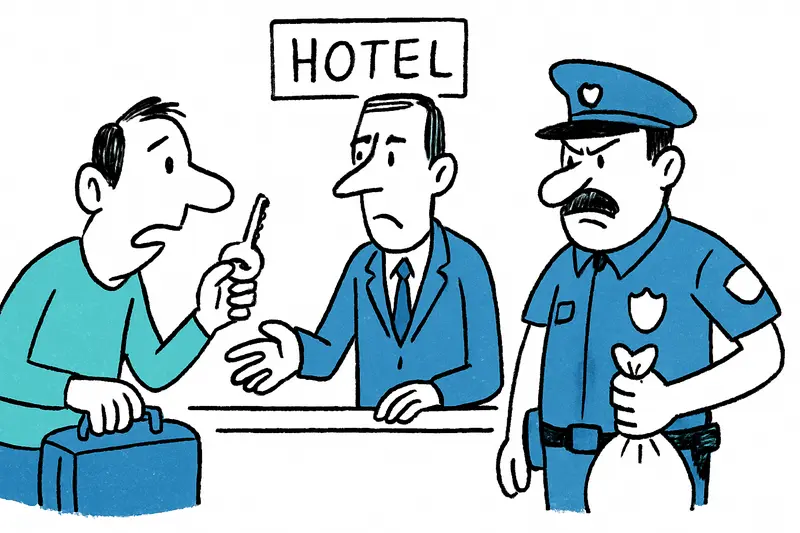
An alleged thief is said to have posed as an apparently helpless guest in Madrid, Ibiza and Palma — using a simple ruse: 'My key isn't working.' Why hotels remain vulnerable, and what would immediately help here in Mallorca.
The 'Defective Key' Trick: How a Hotel Thief Exploited Palma, Ibiza and Madrid
The story reads like a crime novel set by an open window on the Passeig Marítim: a well-groomed man, an offhand line - and days later cash, cards and expensive accessories are missing from hotel rooms. Police trace a path from Madrid-Chamartín via Ibiza to Palma de Mallorca. The method seems simple but was apparently very lucrative.
The trail: Chamartín, Ibiza, Palma
In May the first report was filed in Madrid, shortly afterwards reports came from Chamberí, from several hotels in Ibiza (between 17 and 19 August) and finally four cases in Palma. Even an entry from Bilbao involving violent theft appears in the file. In Ibiza more than €38,000 in cash and luxury goods are said to have been stolen in two days. In one case nearly €1,000 was attempted via fraudulent card payments.
The method: Charming, confident, fast
The sequence is always similar: the man appears as a normal guest, explains the room card won't lock the door or the safe is 'locked'. Staff and other guests describe him as self-assured, some almost bold. A rented motorcycle - fast, nimble, easy to hide in summer nights - is said to have facilitated moving between locations. The result: confused staff, briefly opened trust and access to the room.
Key question: Why do such tricks keep working?
The answer is not a single failure but a combination of everyday weaknesses: crowded bars, staff working quick shifts, language barriers and routines that favor hospitality over suspicion. When scooters hum at the harbor at two in the morning and the reception of a small city hotel is staffed by one person, a few convincing words are enough to override alertness.
What is often missing in public debate
Concrete insight into operational practice is lacking: How are night check-ins actually handled? Who may grant access without further questions? How good are the protocols for faulty locking systems? In many properties there is no mandatory call-back rule - that is, calling the room number back before allowing access. Such small organizational gaps first create the platform for the trick.
Concrete measures for hotels - without distrust, but with sense
There are practical steps that can be implemented immediately without banishing hospitality from hotels:
- Standardized identity check: A brief ID check with every complaint before cards are reprogrammed or doors opened.
- Call-back procedure: Staff call the room number and confirm the person on the line. That prevents unauthorized access in many cases.
- Two-person rule: If in doubt, not one person decides alone but two staff members together.
- Technical upgrades: Logging of all lock and safe resets, audit logs and user-friendly instructions for guests on operation.
- Training and checklists: Short trainings for night shifts, clear procedures and a visible notice at the desk: 'If there are problems, we always call the room first.'
Tips for guests - a few simple rules help a lot
Guests can also take responsibility: keep valuables in the safe, record card numbers separately, speak to reception in person if unsure and never grant a stranger access to the room alone. A simple rule often helps: if someone claims your card isn't working - have yourself connected or go to reception in person.
Investigation: Questions still open
The police continue to investigate; names have not yet been released. It will be important to establish whether there are firm links between the cases - same language, same clothing, perhaps similar times or a particular motorcycle model. Sometimes a tiny detail is enough to put the pieces together: an unusual time, a phrase the man always said, or the scooter's license plate.
Outlook: Networking and pragmatism instead of panic
This does not mean Mallorca must go into alarm mode. Rather, smart networking is needed now: an exchange between hotels, a short notice to staff about the current modus operandi and the consistent introduction of simple routines would quickly make the trick unattractive. When the sea murmurs on a warm summer night, scooters sing softly and the promenade is full, attention helps - not mistrust towards guests, but protection for locals and holidaymakers alike.
If you noticed anything unusual in recent months: report it. Sometimes it's only a small detail that ends a series of offenses.
Similar News
Sleeping in a Stolen Car Outside the Police Station: What Does the Playa de Palma Case Say About Prevention?
An 18-year-old was found in a car reported stolen in front of a police station in Playa de Palma. A screwdriver, glove, ...
Gynecologist Shortage in Manacor: Emergency Births at Night Rerouted to Palma
Due to a shortage of gynecologists, acute births that arrive at Manacor's emergency department at night are temporarily ...

Alcúdia acquires Gatamoix colony: nature, culture and education for Puig de Sant Martí
The municipality of Alcúdia has purchased the historic agricultural colony Gatamoix (Es Poble Nou) and is making the sit...

Island council tightens rules against the blue crab — is it enough?
From 2026 the Consell de Mallorca allows catching the invasive blue crab in almost all waters (except protected areas) a...

Gastrofest in Binissalem: "Ja Era Hora" fills the school park
Today the parking lot of the Escola Graduada in Binissalem turns into a festival mile: children, traditional dances, a p...
More to explore
Discover more interesting content

Experience Mallorca's Best Beaches and Coves with SUP and Snorkeling

Spanish Cooking Workshop in Mallorca
