
Storm exposes amphorae: Who took the Roman finds from Playa de Palma?
Storm exposes amphorae: Who took the Roman finds from Playa de Palma?
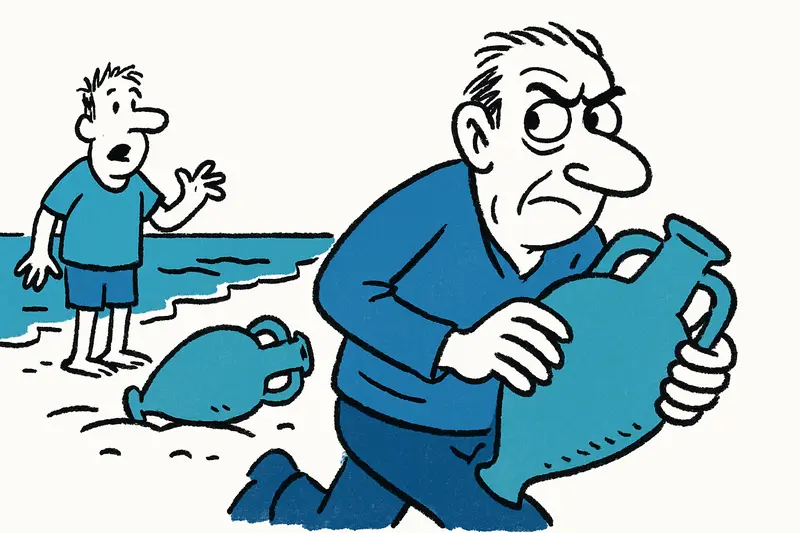
After the storm, amphorae from a Roman shipwreck were washed ashore at Playa de Palma. Police and Guardia Civil combed the area — but found nothing. What is missing in the protection of this underwater site?
Storm exposes amphorae: Who took the Roman finds from Playa de Palma?
Late on the morning after the violent storm, fragments of pottery and halves of amphorae suddenly lay in the sand along the Ses Fontanelles stretch of Playa de Palma. The sea had uncovered an old site, a shipwreck anchorage from Late Antiquity that has long been talked about on the island. Within hours officers from the National Police and the Guardia Civil were on site — they combed the neighborhood, carried out raids, but could neither locate the missing pieces nor identify any suspects.
Key question
Who took the amphorae: were they spontaneous collectors, organized looters, or just beachgoers who did not know what they were holding?
The facts are sparse: the wreck dates from the 4th century AD and is considered one of the most important underwater sites in the western Mediterranean, as discussed in Roman Wreck off Can Pastilla: Piecemeal Recovery Raises Questions for the Island. The Island Council is currently working on a larger recovery and conservation project and has put out a tender for machinery, infrastructure and equipment — the application deadline is February 9, and details of the tender and funding debate are covered in Can Pastilla: The Roman Wreck and the Question of Responsibility and Funding. Nevertheless, a gap remains between this planning and the protection of artifacts that are actually visible.
Viewed critically, the incident shows how vulnerable archaeological material on exposed coasts is. Storms and high waves sometimes reveal layers that have rested for centuries. On windy mornings along the Paseo Marítimo you often see dog walkers, joggers with earphones and retirees on benches, while the beach is scattered with litter, seaweed and occasionally driftwood. It is in this mix of everyday life and natural force that small objects easily disappear — they fall into the hands of the first finders, without it being immediately clear what historical significance they have.
What is missing in the public debate is a clear, practicable interim solution: how do you protect sites in the days and weeks before heavy recovery equipment arrives? Police presence alone is not enough. During the recent checks officers searched the neighborhood and carried out house searches, but found nothing tangible. That highlights a major weakness: there appears to be no fast inventory and no clear marking that would sensitize staff, residents and beach visitors and give them instructions on what to do.
From the perspective of a local observer the situation is familiar. On clear mornings you can see dive centers on the beach, fishing boats in the Portixol harbor, and sometimes colleagues from the Island Council checking charts and dive plans. But on days with hurricane-force gusts the island is busy clearing roads and securing shelters — archaeology-sensitive measures fall by the wayside.
Concrete approaches can be described:
1. Immediate inventory and marking: An easy-to-implement step would be to place mobile signs and information sheets at the entrances to Playa de Palma, plus a quick photographic documentation of the exposed objects by archaeologists. Anyone who finds something should be obliged to report the finds immediately.
2. Temporary guarding: For the critical days after a storm, volunteers, local dive schools and coastal wardens could be coordinated to secure finds until professional salvage teams arrive. This costs little and creates transparency.
3. Faster communication: A clear emergency contact for the Island Council or cultural authority, made publicly visible, would avoid inquiries and prevent ignorance from turning into the appropriation of cultural property.
4. Legal and awareness work: Anyone who removes historical objects from public waters risks criminal and administrative consequences. Public outreach in several languages — Mallorcan, Spanish, German — makes clear that finds are not souvenirs.
The recent incident at Playa de Palma is more than a curious storm story. It is a wake-up call: the large tender from the Island Council for recovery and conservation is necessary, but it must not be the only response. Archaeological treasures are not an abstract task for experts in a laboratory; they often lie in the middle of everyday life — in the sand, under people's feet and under the eyes of beachgoers.
Conclusion: If the Island Council, police, dive centers and local communities create a pragmatic protection network together, the gaps between emergency response and long-term recovery can be closed. Otherwise every storm threatens to distribute history again — into private hands or into the beach bar's waste container.
Read, researched, and newly interpreted for you: Source
Similar News
Drama in Palma: 63-year-old dies after fall in bathroom
A 63-year-old man was found seriously injured in an apartment in La Soledat and later declared dead. The National Police...
Card Payments on Palma's Buses: Convenience or Recipe for Confusion?
Palma's EMT is rolling out card payments across the fleet; around 134 buses already have the system, with full conversio...
Tractors on the island: Mallorca's farmers protest against EU rules and Mercosur
On January 29 dozens of tractors rolled from Ariany and Son Fusteret. The demand: protection for local agriculture again...
Raid in Palma's Prison Ruins: Control Instead of a Solution – Who Helps the 500 People on Site?
A large-scale check took place early morning in Palma's former prison: 160 people were identified and one person was arr...

After property purchase in Palma: What the ownership change really means for cult department store Rialto Living
The historic Rialto Living building has a new owner — operations and the lease remain in place. Still, the sale raises q...
More to explore
Discover more interesting content

Experience Mallorca's Best Beaches and Coves with SUP and Snorkeling

Spanish Cooking Workshop in Mallorca
