
'The Weapons Must Fall Silent' in Palma - Between Protest and Uncomfortable Questions
More than 300 people gathered at the Plaza de las Tortugas to criticize Spain's military policy and the role of the Balearic Islands as a potential operations base. What is missing from the debate — and which answers are realistic?
'The Weapons Must Fall Silent' in Palma - Between Protest and Uncomfortable Questions
More than 300 people at the Plaza de las Tortugas demand: away from military logic, toward diplomacy and aid
On Friday evening people gathered at the Plaza de las Tortugas in Palma. Candles flickered, occasional guitar chords filled the cool air, and voices at times drowned out the hum of cars in the distance. The rally carried a clear motto: peace instead of further escalation. Organizers from the alliance "Mallorca per la Pau" had called for the action; speeches addressed the situation in Gaza, Spain's role as a NATO partner and the use of logistical resources — for example the mention of the frigate ESPS Cristóbal Colón (F105) and the military facilities in Rota and Morón.
Key question: What responsibility do local voices on Majorca have when national alliances and military deployments make foreign policy visible on the ground? This question ran like a red thread through the speeches: those who take to the streets in Palma — as reported in Palma after the Protest: How Freedom of Expression and Everyday Life Can Be Balanced — do not only want to symbolically express their displeasure, but to spark a debate about the concrete role of the islands.
Critical analysis: The demonstration made clear that opposition to military measures takes place on several levels. First: Many participants criticized that the government verbally opposes an open war while at the same time providing military means. Second: The demand that Spain should rethink its NATO commitments touches on serious security and economic questions that can hardly be decided locally. Third: Emotional attributions — from accusations of "genocide" to calls for boycott — show how much humanitarian distress can polarize public debate.
What is often missing in public discourse: sober information and voices that mediate between law and emotion. There is little room for discussions about legal frameworks, veto rights, the concrete legal situation around the use of bases or the dispatch of ships (see concerns raised in Ammunition Depot at Son Sant Joan: Prohens Demands Clarification). Likewise, perspectives are often missing from people directly connected to the basic infrastructure or to the economic consequences — for example port workers, suppliers or family members of military personnel.
An everyday scene, because it shows how Petra and Andrés think: In a bar on Passeig Mallorca, where staff were still polishing glasses, I heard a woman say: "We are for peace, but we also want to know what exactly is happening here. When a ship sets sail, that doesn't only mean politics in Madrid — we see that here on the island." Such voices are neither loud nor spectacular, but they are important: they demand transparency and responsibility instead of hot-headed rhetoric.
Concrete approaches that the gathering could promote: 1) An independent information office in the Balearic Islands that provides clear facts about military movements — who, how, why. 2) A municipal dialogue process with experts in international law, security studies and representatives of civil society, organized by town halls and universities. 3) Strengthen parliamentary oversight at the national level: a public hearing on alliance commitments and their practical implementation. 4) Support practical humanitarian measures: local collection points for relief supplies, coordination with established NGOs and preparation of reception spaces for refugees.
These proposals are not naive. They recognize the difference between symbolic demonstrations and structural political work: protest ignites concern, but only institutional processes can drive sustainable change. On Majorca this could mean demanding clear protocols so that the local population knows when which infrastructure is being used and for what purposes.
What is also missing: a moderate public voice that is taken seriously. As the debate polarizes, it risks reaching a dead end. Those who call for the resumption of dialogue must also propose real steps — for example the establishment of an advisory board that weighs operational requirements between civilian and military authorities.
The message of the rally remained striking: "The weapons must fall silent" is more than a slogan; it is an appeal that touches on law and humanity. At the same time it raises questions that go beyond mood: how much sovereignty do municipalities have? Which control and information rights do citizens demand? And how can humanitarian needs be linked in the short term with long-term security policy?
Pointed conclusion: Demonstrations like the one at the Plaza de las Tortugas are necessary because they make unease visible. But they must be accompanied by fact-based work, offers of dialogue and concrete mechanisms — otherwise only the echo of the noise will remain. Majorca needs more transparency, more participation and a clear sequence of steps that can turn protest into tangible policy.
Read, researched, and newly interpreted for you: Source
Similar News
Who will be allowed to walk through the Serra in the future? The law that pits hikers and landowners against each other
A new draft law called Llei de la Serra is stirring debate in Mallorca about access rights to paths in the Tramuntana mo...

When Luxury Refugees Arrive: Reality Check on the Mallorca Surge
Agents report a sudden rise in demand from Europe and the US, with budgets of up to €100,000 per week circulating. What ...

La Lonja, Lights and Demands: What Marga Prohens' Speech Really Provokes
Festively lit, politically clear: At the Balearic celebration in La Lonja, Marga Prohens spoke about identity, underfund...
Two crashes on the Ma-13 minutes apart: Why this stretch feels dangerous again
Within about ten minutes on Thursday afternoon two collisions occurred on the Ma-13 between Alcúdia and Palma. Six vehic...
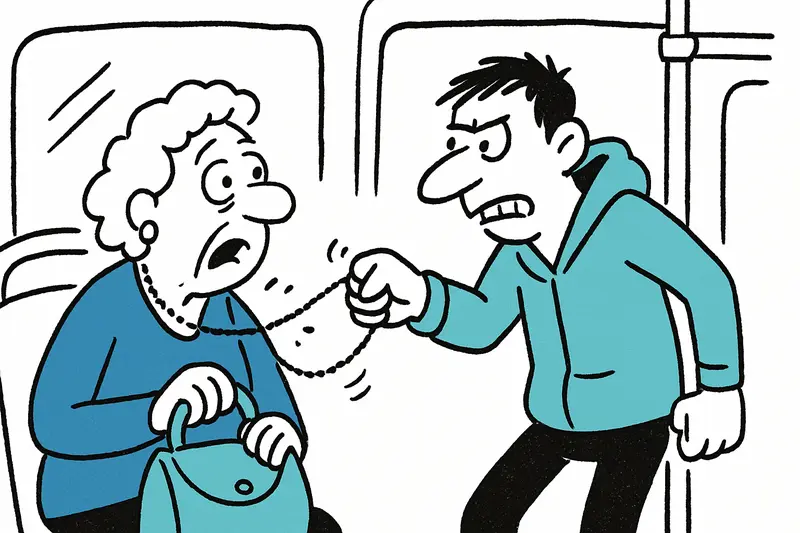
When Chains Snap in Palma: How Safe Are We on Buses?
Two cases in which a man's gold chains were torn from his neck by passengers in Palma ended with an arrest. A reality ch...
More to explore
Discover more interesting content

Experience Mallorca's Best Beaches and Coves with SUP and Snorkeling

Spanish Cooking Workshop in Mallorca
