
Ceiling collapse near Blanquerna: Evacuation and uncomfortable questions
Ceiling collapse near Blanquerna: Evacuation and uncomfortable questions
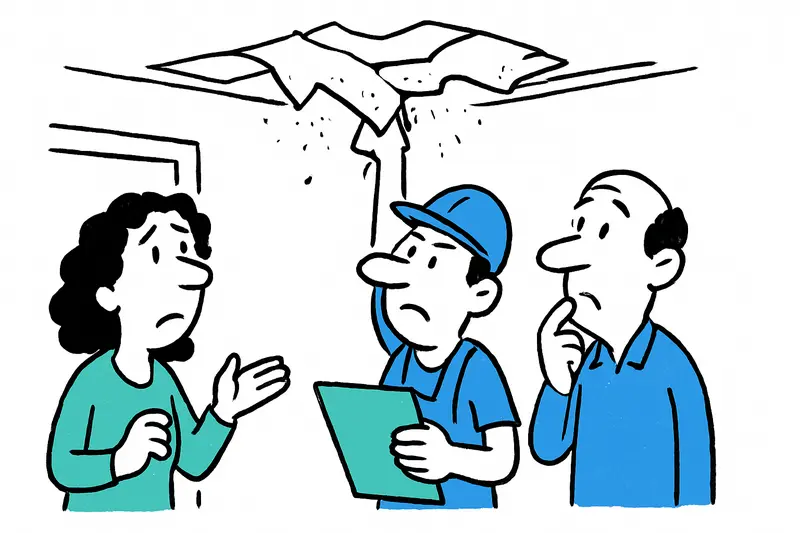
Part of a ceiling collapsed yesterday afternoon in an occupied apartment near Calle Blanquerna. No one was injured, but the building was evacuated. Why do such incidents happen in the middle of Palma — and who is responsible for residents' safety?
Ceiling collapse near Blanquerna: Evacuation and uncomfortable questions
Yesterday afternoon part of the ceiling gave way in an old apartment not far from the Calle Blanquerna pedestrian zone. Firefighters and police were quickly on the scene; two elderly residents were able to get out, and there are no injuries. Nevertheless, the entire building was evacuated as a precaution and the Red Cross took over care. A similar large-scale evacuation occurred during the hotel fire at Playa de Palmanova. Those are the sober facts. What remains is an uneasy feeling for residents and passersby when you see the high-visibility work vests and hear the sirens.
Key question
How safe are the inhabited older buildings in Palma's city center — and why must people leave their homes before it is clear who bears responsibility?
Critical analysis
The incident reveals several typical weaknesses: moisture, loose plaster layers and lack of maintenance. Especially in older buildings around La Lonja and Cort problems accumulate over years: damaged roofs, leaking balconies and outdated installations. When owners are not permanently present, the burden of upkeep often shifts to the community of neighbors or to public authorities — and that is where gaps appear. Inspections mostly take place reactively, after complaints or accidents, not systematically. These concerns echo incidents at major sites such as the Wall Collapse at Palma Airport, which raise questions about oversight of larger works.
What is missing from the public debate
The immediate danger is discussed; far less often are the long-term causes addressed. There is a lack of debate about funding mechanisms for renovations, clear rules of responsibility for jointly owned property and practical solutions for elderly people living in unsafe apartments. Also rarely discussed is how technical defects, excessive moisture in the masonry and incorrect ventilation habits interact and gradually destroy building fabric.
Everyday scene from Palma
Anyone who walked past Calle Blanquerna yesterday heard the dull clatter of emergency vehicles, the murmuring of neighbors and the occasional tolling of the nearby church bell. On the pavement were a few stacked moving boxes, two older women in coats with blankets draped over their shoulders, and a young man holding the building's cat. A bakery on the corner smelled of freshly baked Ensaimada — a small, almost comforting contrast to the construction-site atmosphere.
Concrete solutions
A few sensible steps can be implemented immediately: first, mandatory regular safety inspections for residential buildings of older construction in central neighborhoods — at intervals that take the condition into account. Second, funds or low-interest loans for urgent repairs, linked to social criteria so that elderly or low-income residents are not left behind. Third, better information duties: residents must clearly know who in the comunidad de propietarios is responsible for the roof, façade and utilities. Fourth, faster emergency accommodation and a clear procedure so that evacuees do not live in uncertainty for days.
Practical measures for neighborhoods
At the local level neighborhood work helps: mutual checks, written defect reports to the municipal administration and collecting small donations for short-term repairs. Craftsmen networks with transparent prices could help building communities compare offers quickly. Training on moisture prevention and proper ventilation would also be useful — simple measures that can prevent long-term damage.
Legal and political questions
Legally, owners, communities and operators are likely to have different obligations; in practice complicated ownership structures often collide with the urgency of repairs. Municipal authorities should communicate more clearly what support is possible — and finally maintain lists of at-risk buildings instead of reacting only sporadically. Recent closures after a crack discovered in Cala Major underline this need, as reported in the Risk of Collapse in Cala Major: Six Venues Temporarily Closed. Transparency would increase pressure on those responsible and protect those affected.
Conclusion
The ceiling collapse at Blanquerna is a warning sign for Palma's city center: damage to building fabric is not harmless and affects the most vulnerable. It is not enough to issue reassuring press releases after interventions. What is needed is a system of prevention, financial support and clear responsibilities. Otherwise the next evacuation is only a matter of time — and the dangerous feeling of living on thin plaster will remain.
Read, researched, and newly interpreted for you: Source
Similar News
Monkeypox in Mallorca: Clade I detected – how worried should we really be?
Health authorities have for the first time recorded the Clade I strain of Mpox in the Balearic Islands. Case numbers rem...
Dead Aunt in Suitcase: Why This Case Raises More Questions Than Answers
A court sentenced a woman to 17 years in prison after she confessed to killing her 91-year-old aunt in Sineu and transpo...
El Terreno Gets a New Boutique Hotel – Family Project Between History and Rooftop Terrace
In the west of Palma a small boutique hotel is being created across two houses on Calle Joan Miró. A family project rest...

Sky, Haute Couture and Island Tales: An Early Flight Attendant Remembers
As a young woman she entered the world of aviation, wore designs by Pertegaz and Berhanyer, and made Mallorca a second h...
From Bingo to the Stage: Palma's Historic Hall to Be Revived as a Café-Theatre
A historic building near Mercat de l’Olivar has a new owner. The quiet bingo hall could become a café-theatre with a sta...
More to explore
Discover more interesting content

Experience Mallorca's Best Beaches and Coves with SUP and Snorkeling

Spanish Cooking Workshop in Mallorca
