
Fatal Crash in Palma: Verdict — and the Questions That Remain
Fatal Crash in Palma: Verdict — and the Questions That Remain
A court in Palma sentenced a man to two years in prison and a fine after a 36-year-old German woman was fatally struck on Palma's harbor road in July 2023 and the driver fled. What the verdict answers — and what the island still needs to examine.
Fatal Crash in Palma: Verdict — and the Questions That Remain
Key question: Is the court verdict sufficient to restore responsibility, prevention and the trust of people on Mallorca?
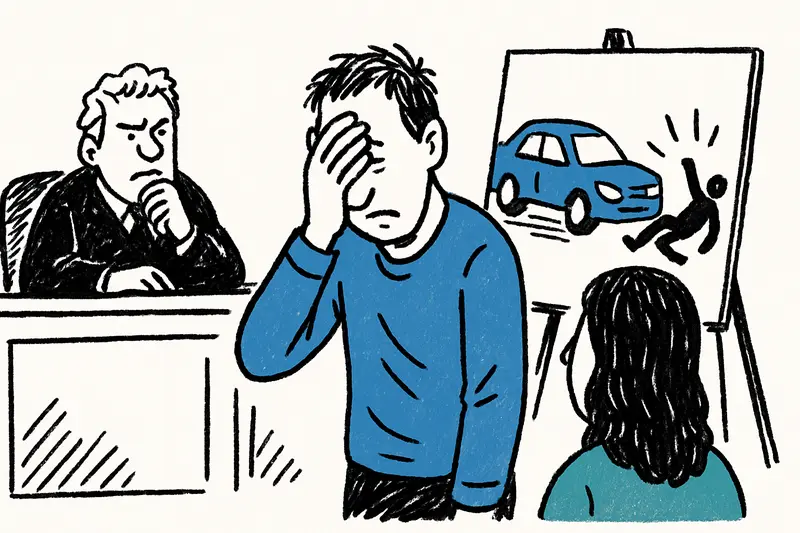
In the early morning of 16 July 2023, a 36-year-old woman, born in Germany, was struck by a BMW on Palma's harbor road and died at the scene. The driver continued driving and only turned himself in to the Guardia Civil the next day. In court he admitted to negligent manslaughter and leaving the scene of an accident. The sentence: two years in prison and a fine of €6,480. Parts of the sentence can also be suspended on probation, provided he remains offense-free for five years and attends a road safety course. In the courtroom the defendant asked the victim's mother for forgiveness in tears: 'I beg you from the bottom of my heart for forgiveness. I'm sorry. A thousand times sorry.' The mother replied — translated —: 'I hope you will remember that for the rest of your life.' The crash is detailed in Fatal Accident on the Paseo Marítimo: Trial Raises Questions About Safety and Control.
The verdict provides a criminal-law response, but it offers little consolation to a family and no guarantee that a similar tragedy will not recur. This raises critical questions: Was traffic monitoring and prevention sufficient? How does the police handle hit-and-runs under time pressure? And what does the driver's possible connection to criminal networks mean for overall safety on the island?
Critical analysis
The known facts reveal a recurring pattern: at night, on a busy road, a vehicle without valid insurance, speeding, a pedestrian goes unnoticed. Similar late-night collisions have occurred before, such as the After head-on crash in Palma: Fleeing and many questions – 31-year-old dies. The fact that the car did not stop after the impact increases the severity of the event both legally and socially. At the same time, the procedural solution — a combined agreement between defense, civil party and prosecution with the option of probation — shows the difficulty of balancing criminal deterrence, resocialization and the interests of victims. Debate over such probationary outcomes can be seen in Suspended Sentence After Abuse in Palmanova: A Verdict That Raises More Questions. Residents along the Paseo Marítimo are left with a feeling of insecurity: the street lighting is somewhat dim, night buses and taxis honk, cleaners start their shifts, joggers count their steps — and yet a moment of inattention is enough to end a life.
What is often missing in public discourse
1) The structural perspective: individual verdicts matter, but the discussion about uninsured vehicles, nighttime speed controls and systematic drug testing is often lacking. 2) Victim support: shortly after an accident, bereaved families need rapid, cross-border assistance — in Mallorca and in Germany. 3) Prevention data: how many accidents in Palma involve pedestrians at night? Such figures would enable targeted measures but are rarely part of the debate.
An everyday scene in Palma
Imagine the harbor road at three in the morning: streetlights cast cold light on wet carriageways, voices are muffled, a garbage truck rattles in the background and boats rock in the harbor. It was in this very setting that the collision occurred. The sound of Guardia Civil radios later mixes with the drumming of the harbor launch — images that residents cannot shake off for a long time.
Concrete solutions
- Visibility and speed: install permanent nighttime speed measurements on the harbor road, plus temporary speed cameras at accident hotspots. - Insurance checks: stronger vehicle inspections during traffic controls and at vehicle registration; fines and immobilization for lack of insurance. - Technical measures: better street lighting at pedestrian crossings, reflective road markings and targeted CCTV analysis to reconstruct accident sequences. - Immediate measures after accidents: legal obligation to conduct breath and drug tests at the scene; tougher sanctions for hit-and-run combined with rapid public appeals to find witnesses. - Victim support: establish a clear procedure for cross-border coordination with German authorities, provide on-site psychological care and immediate financial assistance for the bereaved. - Prevention by local actors: train nightlife venues, taxi drivers and security services; run an information campaign for hotels and hostels addressing night traffic and pedestrian behavior.
Conclusion — in brief
The court has delivered a criminal verdict, and the family heard an apology. But a sentence is no patch over deep cracks: uninsured vehicles, a lack of night-time controls and infrastructure that does not adequately protect pedestrians. If Palma wants to prevent the harbor road from becoming the scene of another tragedy, politics, police and communities must act now — loudly, concretely and visibly. Otherwise the confession of one offender will remain a sad isolated scene in a changeable night on the coast.
Read, researched, and newly interpreted for you: Source
Similar News

Palma invests nearly €75,000 in sports centers – is that enough for the problems?
Palma's sports office spent around €74,700 on new equipment in three sports facilities. One indoor pool remains closed —...
100 Kilometers through the Llevant: New GR 226 Long-Distance Trail Opened
The new East Mallorca long-distance trail GR 226 links five Llevant municipalities over 100.4 km. Low difficulty, nearly...
"A disaster" on board: What a drunk passenger means for the Balearic Islands
A heavily intoxicated passenger caused an aborted takeoff from Madrid to Ibiza and about two hours' delay. A reality che...

After mixed weeks: Calmer weather returns to Mallorca
After a period of rain and strong winds, Mallorca's weather is calming down. AEMET reports milder days with highs near 2...

Four Arrests After Series of Shoplifting Incidents in Palma – a Reality Check
The Policía Nacional arrested four men suspected of stealing goods from shops across Palma in nearly 80 incidents since ...
More to explore
Discover more interesting content

Experience Mallorca's Best Beaches and Coves with SUP and Snorkeling

Spanish Cooking Workshop in Mallorca
