
Almost 9,300 Graffiti Removed: Palma Cleans Up — But Does It Hit the Mark?
Almost 9,300 Graffiti Removed: Palma Cleans Up — But Does It Hit the Mark?
Emaya removed almost 9,300 graffiti in Palma in 2025. Are pressure and fines driving the cleanliness campaign — and what is missing to truly shrink the problem?
Almost 9,300 Graffiti Removed: Palma Cleans Up — But Does It Hit the Mark?
Key question: Does Palma clean façades or miss the chance to solve the problem sustainably?
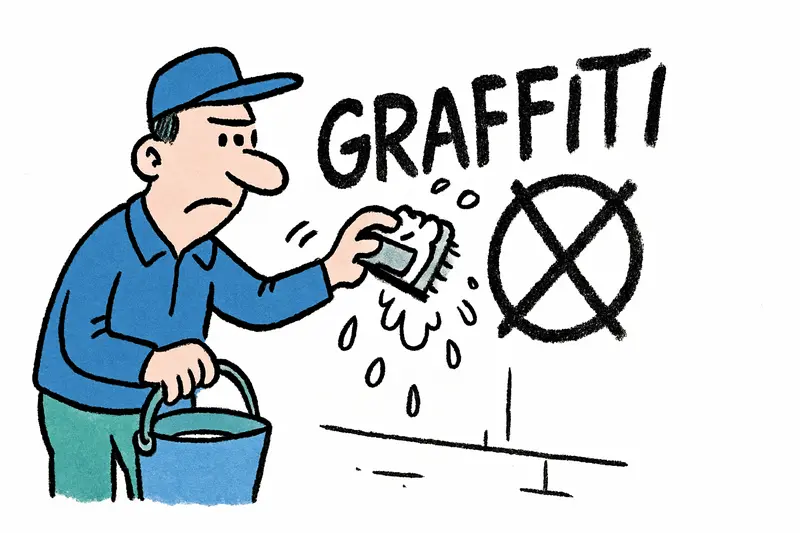
In January, when the Tramuntana wind presses cold air against the stones of the old town, you often see them: the Emaya teams in bright vests, early in the morning on the Plaça Major or on Carrer de Sant Miquel. High-pressure cleaners sing, the water smells of salt and soap, a pensioner with a newspaper stops and shakes his head. In 2025 the municipal services, according to the report, removed almost 9,300 graffiti — a record year. Emaya president Llorenç Bauzà de Keizer presented the figure; since 2022 the amount of removed scribbles has risen by about 79 percent.
The new city code specifies fines of up to 3,000 euros for graffiti vandals, as discussed in Palma takes stock: 7,700 fines — success or just performative toughness?. That sounds like a clear line: remove, punish, move on. But who talks about the costs, who about prevention, who about the origin of the scribbles? If the answer is only penalties, that is a very narrow view of a far-reaching issue.
Critical analysis
Removal alone is not a neutral act — as highlighted in Attack on Picornell Bust in El Molinar: Cleaning Alone Is Not Enough. Every soft-water jet, every color that is steamed off a historic façade, leaves traces — aesthetic but also material. Emaya does what a city administration must do: it reacts. But reaction produces numbers: every removed tag, every removed signature is a figure in a statistic. The number rises. That can mean two things: more people are spraying — or the city is looking more closely, reporting and cleaning faster. The report only shows the result, not the cause.
Fines are a convenient threat for politics: you can show that you are taking a hard line. In practice, however, a fine only has effect if it can be enforced. Many scribblers are young people without income, or sprayers from the tourist hinterland for whom a payment demand remains an empty threat. And publicly visible threats of punishment do not automatically create respect for the city's heritage.
What the discourse is missing
Several things are missing from the discussions around the Emaya figures. First: a focus on prevention. Where are legal walls, where are youth centers with spray workshops? Second: transparency about costs and consequences for listed buildings. Third: an honest debate about the difference between vandalism and urban art. Fourth: answers to the question of who pays for the cleaning — municipal coffers, owners or the perpetrators? If everything falls on the city, cleanups become a permanent burden on the municipal budget.
Everyday scene
If you drive along Avinguda Jaume III in the morning, you see it fastest: a small Emaya van parked, two workers wiping a bus stop, the coffee from the bar next door steaming in the cold, a schoolgirl with a backpack watching a lettering disappear. The dog owner walking down the street mumbles: 'Nice that it's gone, but there will be something new again at the weekend.' That is the recurrence effect the raw numbers do not show.
Concrete solution approaches
If Palma wants fewer graffiti, it needs more than pressure and fines. Proposals that are realistic and locally implementable:
1) Designate legal spaces: Open spots in less sensitive parts of the city, for example under bridges or on industrial areas in Son Ferriol, accompanied by rules. Sprayers get room, the city less trouble.
2) Mobile reporting systems and rapid response: A simple app or WhatsApp number through which citizens can quickly report vandalism. Fast cleaning reduces the copycat effect.
3) Prevention programs: Cooperations with schools, cultural associations and local galleries for workshops that teach techniques and responsibility. Sprayers sometimes become mediators for legal projects.
4) Restorative practices: For minors combine cleaning duties with participation in a workshop or social project instead of only paying a fine.
5) Owner participation and funding models: Innovation funds for the restoration of protected façades; owners are supported instead of left alone, as with recent public investments in facility repairs covered in Palma renews sports facilities: small repairs, big impact - and open questions.
Conclusion
Palma removed a lot in 2025 — visible, measurable, easy to communicate. The figures are impressive, but they are no substitute for a strategy. Those who only remove and punish will prolong the cycle. Better would be a mix of quick cleanups, legal alternatives, educational work and fair rules for owners and perpetrators. Only this way can the number of removed graffiti be reduced permanently — and the city keep its patina without being stuck in a perpetual battle against spray cans.
One final thought: Someone who loves the city doesn't just clean it away. They make sure there's less to clean.
Read, researched, and newly interpreted for you: Source
Similar News

Housing Shortage at the Airport: Why Palma's Outskirts Are Becoming Emergency Camps
Shacks and occupied halls at Son Sant Joan airport show that housing is lacking — families and children live in makeshif...

Trike Trip in the Tramuntana: Enjoying the Curves with the Slingshot
A Slingshot outing becomes a small adventure: low seating, open-air exposure, sea views and the MA-10 — ideal for a powe...

Easier commute: Marratxi builds green link to Palma
Marratxi is creating a combined pedestrian and cycle path between Es Figueral and the industrial area and is adding 144 ...

Renovated Es Pont d'Inca Station: A Meeting Place for People and Memories
The historic Es Pont d'Inca station in Marratxí is usable again after renovation. Visitors, neighbors and a railway soci...

Cycling across Palma: Diada Ciclista invites families
On Tuesday Palma will be rolling again: the Diada Ciclista follows an approximately six-kilometre route to Estadi Son Mo...
More to explore
Discover more interesting content

Experience Mallorca's Best Beaches and Coves with SUP and Snorkeling

Spanish Cooking Workshop in Mallorca
