
Major construction in Port d'Andratx: Who pays the price for the sewer renewal?
Major construction in Port d'Andratx: Who pays the price for the sewer renewal?
In the harbour of Port d'Andratx work is underway to modernize the sewage system – more than €4.1 million, heavy machinery, fears of noise and supply bottlenecks. A critical look at what's missing and how the island could better handle the construction site.
Major construction in Port d'Andratx: Who pays the price for the sewer renewal?
Key question: Can the modernization of the sewage system be reconciled with everyday life, tourism and harbour life?
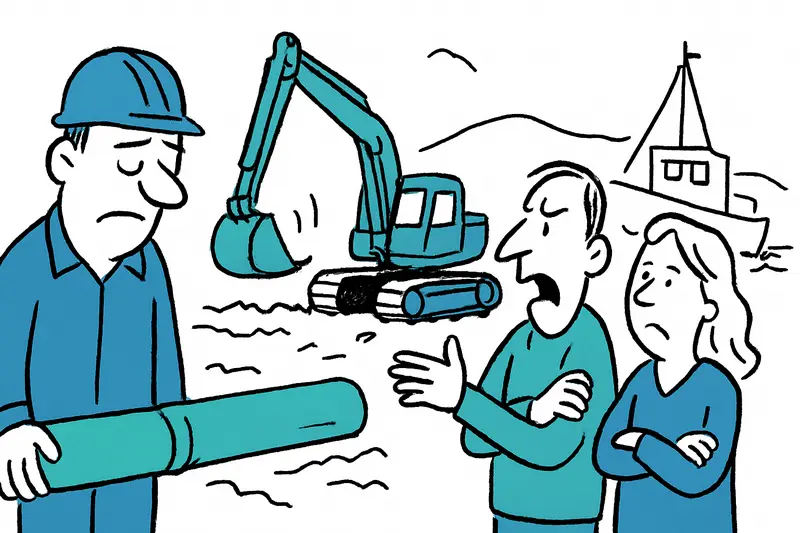
Since early January excavators and rollers have been rumbling through the harbour of Port d'Andratx, as reported in Renovation in Port d'Andratx: Between Construction Site and Long-Term Security. The municipality has announced that the sewage system will be modernized and the treatment plant renewed; the project costs more than €4.1 million, according to Construction by the Water: How Clean and Social Will the Port d'Andratx Renovation Be?. At first glance a necessary investment. For the people who drink their morning coffee on the mole, the fishermen who mend their nets, and shop owners who need weekly deliveries, however, it is also a noticeable disruption.
The official message is reassuring: the work is limited to the carriageway, sidewalks and access to houses and shops remain open; the first section in the harbour area should be finished before Easter. That sounds good — and yet concern remains: when heavy lorries with concrete rings drive the narrow harbour road at six in the morning, deliveries get stuck and morning parking spaces disappear. The scent of fried fish mixes with diesel fumes, and on a rainy day the construction site quickly becomes a mud track.
Let's take a critical look at the procedures. First: scheduling. A completion "before Easter" is a rough guideline, not a reliable date. Construction sites are delayed; material or personnel shortages can push work into the tourist high season. Second: communication. Current notices are helpful, but anyone expecting a tradesman or a delivery in the morning needs short-term, precise information — and not only via a noticeboard, but through local business WhatsApp groups, notices for residents and clearer construction signage.
What has so far been too little discussed in public discourse is the environmental side. Renewing a treatment plant can reduce emissions and odors if technology and operation are right. But accompanying measures — regular monitoring of water quality, clear information on the disposal of dredged material and the handling of possible contaminated sites — are rarely part of public communication. Equally little discussed is how harbour operations will be protected during construction: where can fishermen moor temporarily, how will boat deliveries be handled?
An everyday scene: early in the morning the owner of a small tapas bar on the harbour sits, pours her third coffee without enthusiasm and watches the excavator operator. The neighbour brings fresh bread, the delivery van stops three lanes further this time. A tourist stops, photographs the machine, shrugs and walks away. Such moments show that life goes on — but not without disturbances.
Concrete solutions that could be implemented immediately: 1) Define and communicate precise delivery windows; establish central loading zones outside the narrowest part of the harbour road. 2) Avoid or strictly regulate night or early-morning shifts for noisy work so residents can keep their night-time rest, a concern also highlighted in €6.4 Million for the Peguera–Port d'Andratx Road: Between Comfort and Nighttime Peace. 3) Provide a digital construction update (daily status via messenger and noticeboard) for businesses and residents. 4) Environmental monitoring through independent on-site samples and transparent publication of the results. 5) Temporary parking and pedestrian routes, well signed and barrier-free, so long-established businesses do not lose customers.
These proposals are not expensive; they require organization and the willingness of the municipality and the construction company to work closely together on site. It makes a difference whether a construction site is perceived as a necessary evil or as a project shaped with regard to people, tourism and the environment.
Conclusion: Renewing the wastewater infrastructure in Port d'Andratx is right and overdue. The question remains how fairly the burdens are distributed. If the municipality invests more in precise communication, protection of the local economy and environmental monitoring, not only the sewer needs to be renewed — but also the neighbourhood's trust. Without such measures the construction site risks becoming longer and more expensive than the original estimate suggests. And that is a lesson not only Port d'Andratx but many places in Mallorca are currently learning.
Read, researched, and newly interpreted for you: Source
Similar News

Dream holiday, shattered calm: When the bank card disappears abroad
A simple scene — a card disappears into the machine, panic on the beach. Why such incidents are more than a personal mis...
Estellencs and Water: Why a Desalination Plant Must Be Just the Beginning
The municipality of Estellencs plans to build a small desalination plant — funded by the Balearic government. A necessar...

Despite Renovation: Why Palma’s Paseo Marítimo Remains Empty — A Reality Check
After COVID and long construction works, venues on the Paseo Marítimo are struggling with dwindling customers, rising re...

Five Municipalities Lose Residents – Who Gets Left Behind?
Sant Llorenç des Cardassar, Escorca, Estellencs, Mancor de la Vall and Banyalbufar recorded declines. Why are small muni...

Cardiac Arrest on Bike Tour: What the Death near s’Aranjassa Means for Mallorca’s Cycle Routes
A 72-year-old cyclist suffered a cardiac arrest near the airport and died at the scene. The incident raises questions ab...
More to explore
Discover more interesting content

Experience Mallorca's Best Beaches and Coves with SUP and Snorkeling

Spanish Cooking Workshop in Mallorca
